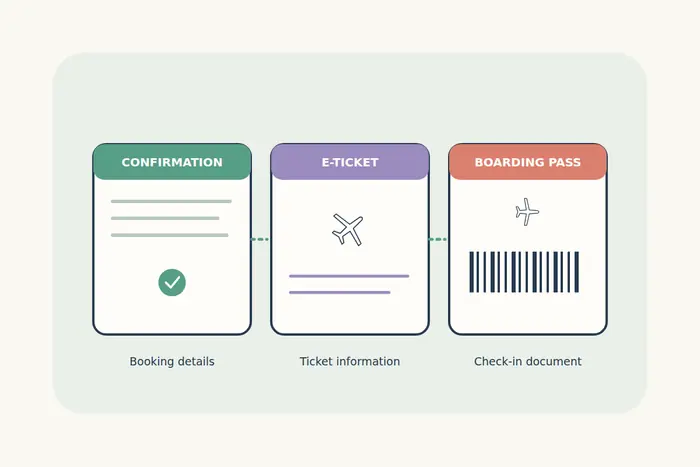
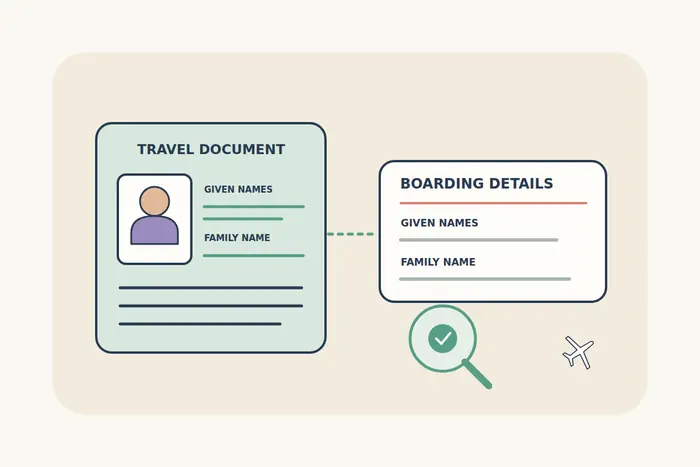
In this guide
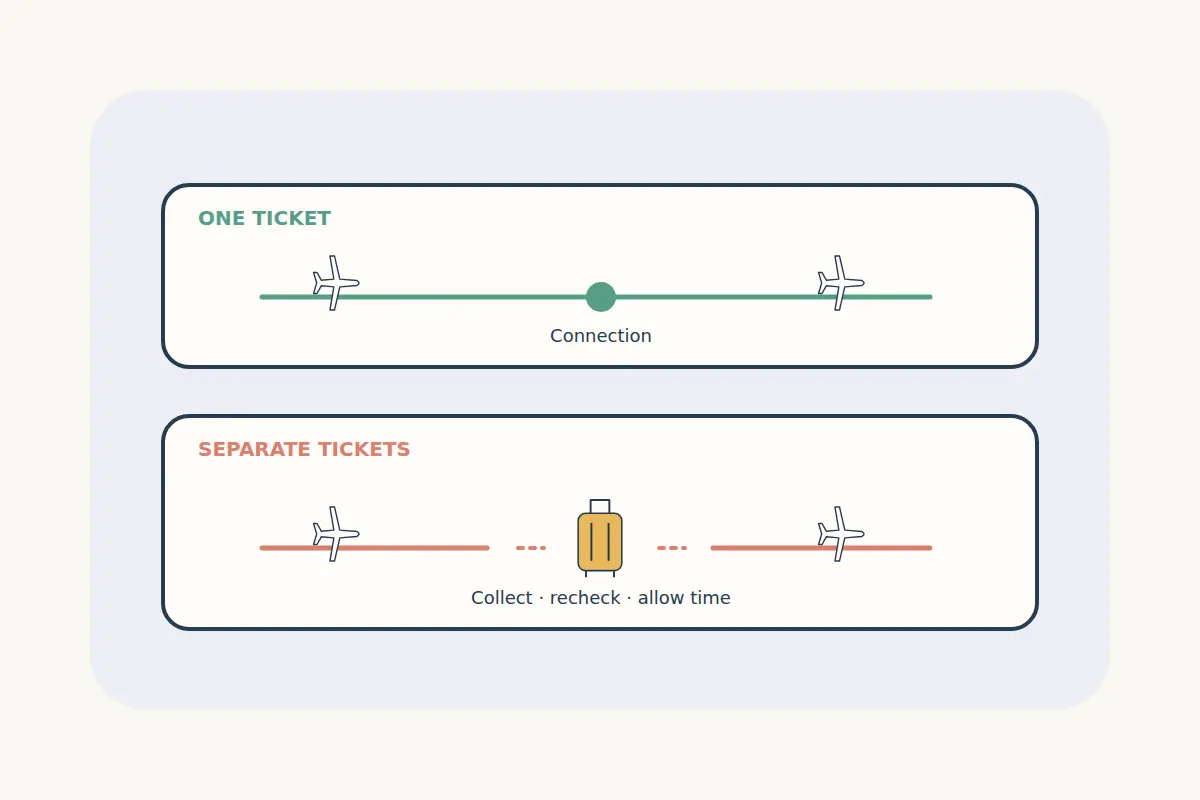
A connecting flight is a journey with an intermediate stop before the final destination. A self-transfer generally means you are responsible for the gap between separately booked flights, potentially including baggage collection and another check-in. Two flights displayed next to each other are not enough to establish the ticketing arrangement.
Before paying, check the offered itinerary and fare conditions. The practical question is not only whether the times fit, but what you must do at the connection and what happens if the first flight is late.
Check the ticket arrangement behind the itinerary
| Point to check | A through-ticket connection | Separately ticketed flights |
|---|---|---|
| Journey terms | Review the connection and disruption arrangements for the ticket. | Review each ticket's conditions separately. |
| Checked baggage | Ask where the bag will be tagged; border or airport procedures can still require collection. | Plan for collection and recheck unless the airline expressly confirms another arrangement. |
| Delay affecting the next flight | Check the carrier's assistance and rebooking obligations for the circumstances. | Do not assume the next carrier will replace a missed separate flight at no cost. |
| Airport process | Confirm terminals, security and any entry or transit checks. | Allow for all arrival, landside, check-in and departure steps that apply. |
A booking reference alone is not a complete description of these arrangements. Ask the booking provider or airline if you cannot determine how the flights are ticketed.
Work backwards from the next flight's check-in deadline
The time between scheduled arrival and scheduled departure is not all usable transfer time. Consider getting off the aircraft, walking to arrivals, border checks where required, baggage delivery, travel to another terminal or airport, check-in, security and reaching the gate.
Illustrative timing example: a flight lands at 13:00 and the next flight departs at 16:00. If that next flight's bag-drop deadline is 15:00, only two scheduled hours remain before bag drop. Those hours must accommodate the arrival process and any transfer, before allowing for delay. This is not a recommended minimum or an assurance that the connection is feasible.
Airports and airlines publish their own guidance. British Airways' connection information illustrates how advice differs by airport and ticket arrangement. Use the instructions for your actual route and allow additional margin for your circumstances.
Confirm where you must collect baggage
British Airways states that separately booked flights with different references are treated as separate journeys and require baggage collection and another check-in. This is a useful example of why you must verify the airline's policy instead of assuming bags transfer automatically.
Even on an itinerary with a through-ticket, arrival-country procedures can require a bag to be collected before continuing. At the first check-in, confirm the destination printed on the bag tag and the procedure at the connection airport. Keep the baggage receipt.
Travelling with cabin bags only can remove a collection step, but it does not remove entry rules, another check-in requirement or a departure cutoff. Read our baggage guide for allowance checks.
Check transit and entry requirements for the actual path
A transfer that requires leaving the transit area can have different document requirements from one that stays airside. Changing airports usually adds a ground journey and requires checking the applicable entry conditions. Do not assume a final-destination visa covers every connection country.
Check the relevant official immigration guidance for your passport, status and itinerary, along with the IATA Travel Centre. Include both directions of travel; the return journey may use a different airport or connection.
Compare the saving with the complete transfer plan
When comparing separate tickets with another available itinerary, list the costs outside the headline fare: additional bags, airport transport, a possible overnight stay and any document requirements. Consider how you would handle a missed second flight before deciding that a small saving is worthwhile.
For a multi-city holiday with several nights between flights, the gap is different from a same-day airport connection. Use our multi-city planning guide to organise the dated legs and ground journeys.
Connection questions before booking
Does using the same airline mean it is a protected connection?
Not by itself. Ticket arrangements and conditions matter; do not assume independently bought tickets become one connected contract because the airline name matches.
Is a three-hour transfer always enough?
No universal number fits all airports, baggage arrangements, documents and travellers. Work from the carrier's guidance and check-in deadlines, and consider delay and assistance needs.
Does paying with crypto affect connection rules?
No. The fare, airline and travel-document conditions still apply. Match the payment instructions at checkout, then check your confirmed itinerary and ticket details.
Compare flight itineraries with the full connection process in mind. If an offered itinerary is unclear, ask support before paying.