In this guide
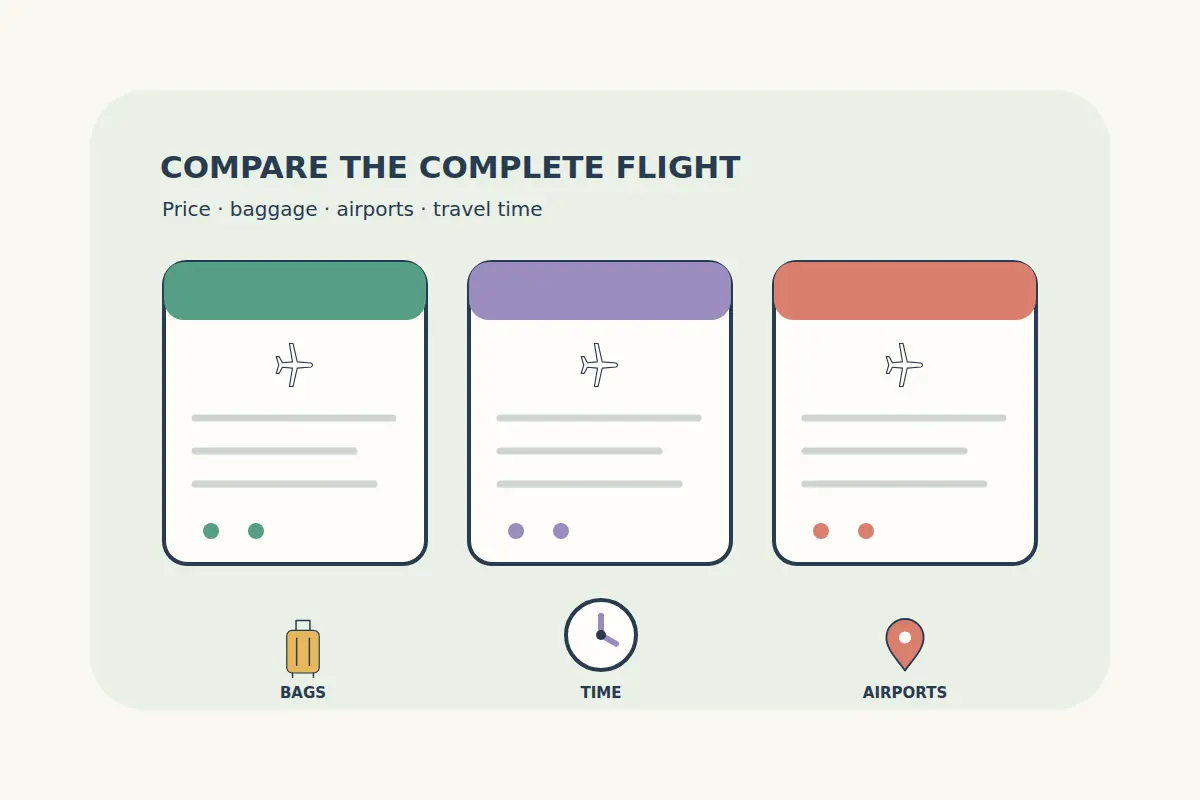
The cheapest flight result is a starting point for comparison, not the complete decision. A lower fare can involve a different airport, an extra hotel night or baggage you still need to buy. The useful question is which available journey fits your actual trip at a total cost and set of conditions you understand.
Start with the same dates, passenger group and cabin when comparing offers. Then use the selected fare's confirmed details rather than assuming that every ticket on the same aircraft includes the same services.
Set your requirements before sorting by price
Decide which constraints are essential: acceptable airports, latest arrival, number of stops, bags and any flexibility you need. A useful shortlist meets those requirements first. Otherwise, a very low fare can keep attracting your attention even though it does not fit the trip.
| Compare | Read on the selected offer | Why it matters |
|---|---|---|
| Complete price | Passenger total, currency and extras you need. | A low starting fare may need additional purchases. |
| Airports and dates | Every arrival, departure and local calendar date. | Ground transfers and hotel nights can change. |
| Baggage | Confirmed allowances by passenger and journey. | Airline name alone does not establish included bags. |
| Duration and stops | Total travel time, connections and airport changes. | The fastest airborne segment may not make the shortest journey. |
| Fare conditions | Change, cancellation and refund information supplied. | Similar schedules can have different restrictions. |
If a requirement is unclear, keep it as an unanswered question rather than marking it included. Missing information and a confirmed exclusion are different things.
Compare the cost of the trip you will actually take
Use the total for the same passenger group and currency, then consider the extras you need. Check whether seats, bags or another service are already included before adding them again. Avoid comparing a one-person preview against another result's whole-party total.
Illustrative example: offer A costs €200, with an additional €40 for the checked bag you need. Offer B costs €225 and includes that bag. In this invented example, A becomes €240 before any other required extras, so B has the lower comparable cost. These are teaching figures, not live fares.
The same exercise applies to transport outside the ticket: a different airport or a very early departure may change your transfer or hotel needs. Keep those estimates separate from the flight price so you know which amounts the booking actually covers.
Read baggage and seat information precisely
Look for the allowance supplied for the selected fare, passenger and relevant journey. A small personal item, cabin bag and checked bag are different products. A familiar airline logo or an economy label is not enough to establish an allowance.
As a carrier-specific example, British Airways explains that its fare choices can include different checked-baggage arrangements. Your selected offer and operating airline determine the applicable conditions.
Use our baggage guide for the terminology. If you want a particular seat, check whether choosing it is included or offered as a separate extra; an allocated seat is not necessarily a free advance choice.
Read the connection as part of the journey
Compare total duration, layover length, airport changes and the local arrival date. A flight landing after midnight can affect the hotel night you need. A long stop can also have practical costs even if the fare itself is attractive.
Check whether the journey is sold together or uses independent tickets. Do not treat a connection between separate bookings as protected simply because the timetable appears workable. Our self-transfer guide covers that distinction.
Read the airport name and code on every leg. The same city name can represent different arrival points, and an airport change requires a separate transport plan.
Compare identical journeys by their actual fares
Two offers can use the same flights but differ in price, baggage and conditions. Keep those fare choices visible in your decision rather than removing one because the schedule looks identical.
Read the actual change and cancellation information supplied. A fare name is a label to investigate, not a universal promise. Our fare-type guide explains why cabin, brand name and ticket conditions answer different questions.
Build and review a shortlist on CryptoTraveler
Start in flight search. Use the result filters to narrow the journeys, then select the comparison controls on offers you want to inspect together. The current comparison supports up to five offers and can highlight their differences.
Compare dates, duration, stops, confirmed baggage and the passenger total together, then open the relevant journey and fare details before selecting. A shortlist helps you decide; it does not reserve every fare or guarantee that a saved price remains available.
Review the selected offer again during booking, including any extras and final payment instructions. Our crypto flight-booking guide covers the steps from selection to confirmation.
Flight comparison questions
Is the fastest result always the best choice?
Compare the complete journey with your priorities. A suitable arrival time, airport or included bag can matter more than a small duration difference.
Do identical flight numbers mean identical fares?
No. Read each selectable fare's baggage, price and conditions even when the itinerary matches.
Does adding an offer to comparison reserve it?
No. Availability and price need to be checked through the selected booking process.
Should I count an included bag as an extra?
No. Use the actual fare inclusions and add only the services you still need, avoiding double counting.