In this guide
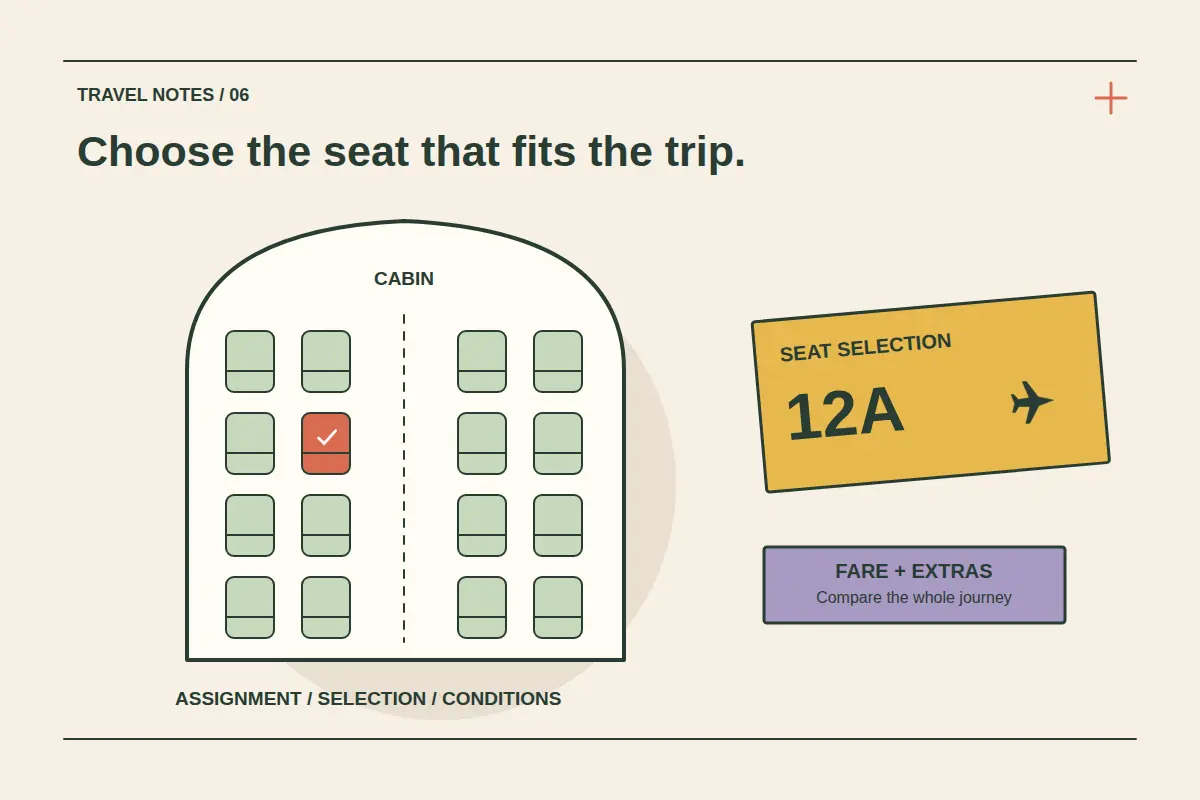
Paying to choose a particular seat is different from paying for the flight itself. Depending on the airline and fare, advance selection may be included, offered for a fee or replaced by a seat assignment later. Read the selected fare's conditions before treating a seat-map price as an unavoidable extra.
The practical decision is how much a specific position matters to your journey. An aisle seat, a companion seat or extra legroom may be valuable, but the conditions and availability need checking for every flight. Start with the offer you selected in flight search, then review any offered extras and the airline's instructions.
Separate transport from advance seat selection
The US Department of Transportation's ticket-buying guidance identifies advance seat selection among optional services and explains that fare restrictions vary. A ticket's cabin label does not independently establish a particular seat or free advance selection.
| Label or situation | What to check |
|---|---|
| Assigned seat | When the airline allocates it and whether changing it later has a charge. |
| Advance selection included | Which seats, passengers and flight segments qualify under the fare. |
| Paid standard seat | The selection cost and the conditions for changes or refunds. |
| Extra-legroom or exit seat | The exact benefit, restrictions and passenger eligibility. |
| No seat number yet | Whether selection or assignment happens later in the airline's process. |
A blank seat field before check-in is therefore something to understand, not an automatic reason to buy the first extra offered.
Read the rule for your fare and operating airline
Use the fare description and the operating airline's current seating page. Read eligibility for complimentary selection, the opening time and any exceptions. Membership benefits or a more expensive fare can affect what is included, but do not assume those benefits apply to companions or every partner flight.
For example, British Airways explains that its selection arrangements depend on fare and cabin, including a distinction between choosing and being allocated a seat. Treat the airline's example as its own policy rather than a rule for all carriers.
Our fare-type guide helps you compare the benefit with baggage and flexibility, instead of choosing on the fare-family name alone.
Compare the total for the journey you actually need
Check whether the price is per passenger, per flight or covers another stated combination. A return trip with connections can involve several separate seat choices. Add the services you intend to use before comparing two offers.
For an illustrative comparison, if one fare costs 20 units more and includes the particular selection you need, while the lower fare would require 35 units for the same benefit, the higher fare may have a lower relevant total. Verify the actual inclusion and price rather than treating those fictional amounts as a current quote.
Use the offer comparison checklist to evaluate the full route, timing, baggage and required extras together.
Check family and assistance needs early
Families should review the airline's arrangements for children and accompanying adults before deciding how to handle selection. Establish what seating is arranged, which ages or circumstances the policy covers and whether you need to contact the carrier. Do not rely on another passenger agreeing to swap onboard.
If you need an accessible seating arrangement or other assistance, describe the requirement through the appropriate airline process before buying a standard extra. An exit-row seat has eligibility conditions and should not be treated as a general solution for comfort or mobility needs.
Use the available booking channel correctly
During CryptoTraveler booking, review any seat services actually offered for that itinerary. Availability varies. If no suitable seat option is presented, check the airline's post-booking instructions using the relevant airline reference rather than assuming the seat-map service is available for every carrier.
Keep your flight order, any service purchase confirmation and the airline reference together. The online check-in guide explains which reference and operating airline to use. Avoid purchasing the same service again until you understand the status of the first purchase.
Read change and refund conditions for the seat service
A paid seat choice can be affected by an aircraft substitution or another operational change. Review the airline's terms for reassignment, alternatives and any refund request. A seat-selection receipt is not a guarantee that the cabin layout will never change.
Keep those service rules separate from the ticket's change and cancellation conditions. If the flight is disrupted, check what happens to each purchased extra as well as the replacement journey. Pay attention to which booking channel needs to handle the request.
Flight seat selection questions
Must I pay just because a seat map displays prices?
Read your fare's selection and allocation rules. The prices may describe choosing specific seats rather than an additional requirement for ordinary carriage.
Can I guarantee that my group sits together by waiting?
Review the carrier's actual family and group arrangements. Do not infer a particular layout from being on the same reservation.
Does a more expensive seat include extra baggage?
Only when the selected product explicitly says so. Seat services, baggage and fare flexibility are separate benefits to check.