In this guide
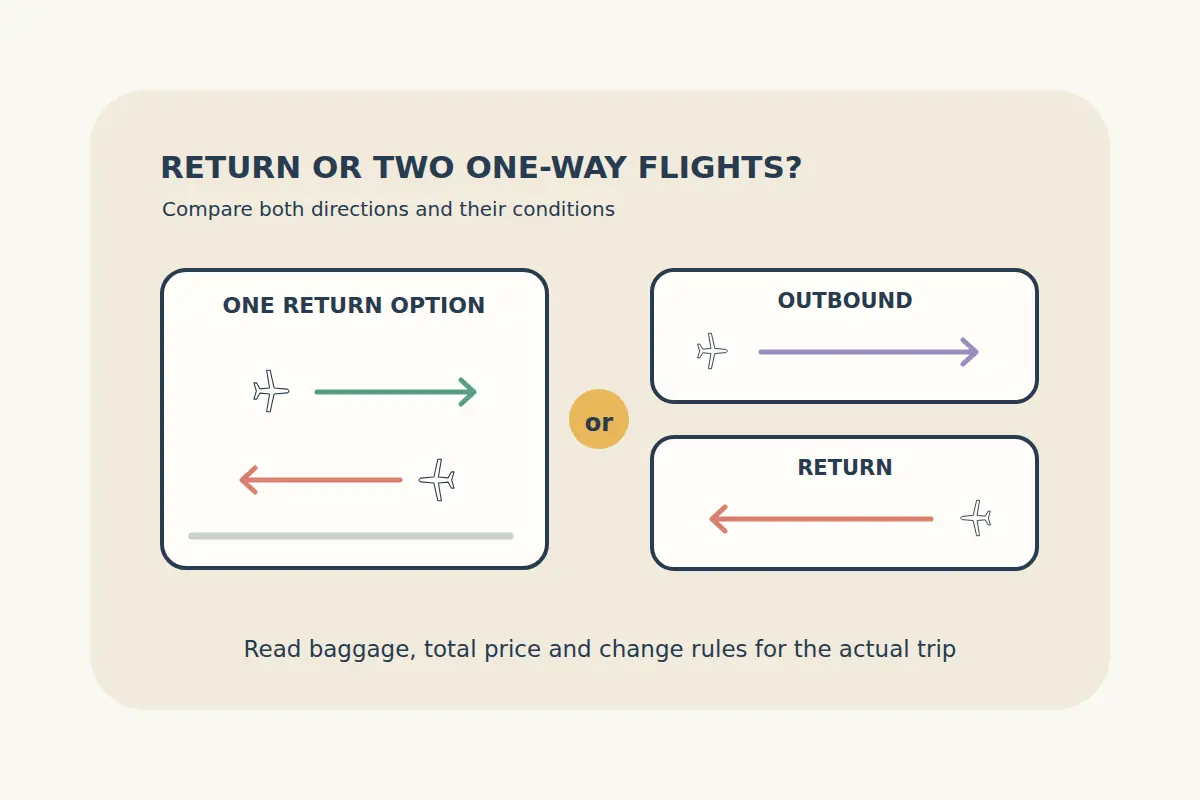
A return trip can be bought as a round-trip option or assembled from separate one-way purchases. Neither structure is automatically cheaper or more flexible. The useful comparison includes both directions, the services you need and the conditions governing each booking.
A shared account, airline name or personal itinerary does not by itself tell you whether two flights are on one ticket. Read how the selected travel is sold and confirmed before relying on a particular connection or cancellation arrangement.
Define the same complete trip for both comparisons
Start with the same travelers, dates, airports and cabin. If one option uses a different return airport or arrives a day later, record that difference explicitly. Otherwise, a price comparison can conceal a different holiday.
| Question | Round-trip option | Separate one-way purchases |
|---|---|---|
| What does the total cover? | Check the complete selected outbound and return itinerary. | Add both purchases and the extras needed on each. |
| Which baggage applies? | Read each direction's confirmed allowances. | Read both selected fares independently. |
| How do changes work? | Check rules for modifying the relevant part of the ticket. | Check the conditions and process for each purchase. |
| What happens after cancellation? | Read the applicable ticket and airline conditions. | Do not assume a change to one purchase resolves the other. |
| Which references will I use? | Retain all supplied airline and booking references. | Keep the separate confirmations clearly identifiable. |
If you intend to return from another city, compare that route as well. Our multi-city flight guide explains another way to organize a route without assuming every trip returns from its first arrival airport.
Add the costs on both one-way purchases
Compare the total for the same passenger group and currency. Include the bags, seats and other services you actually need on both directions, checking which are already included. A cheap outbound price is not a quote for the whole trip.
Illustrative example: a round-trip option costs €590 with the checked baggage you need. Separate one-way fares cost €300 and €250, but each requires a €40 bag. The two one-way total becomes €630. These are invented figures for comparison, not current fares or a claim that round trips are usually cheaper.
Check any ground-transfer or hotel-night difference separately. Those costs can matter to your decision without being part of the ticket total. Our flight comparison guide explains how to keep the components clear.
Read flexibility instead of inferring it from the structure
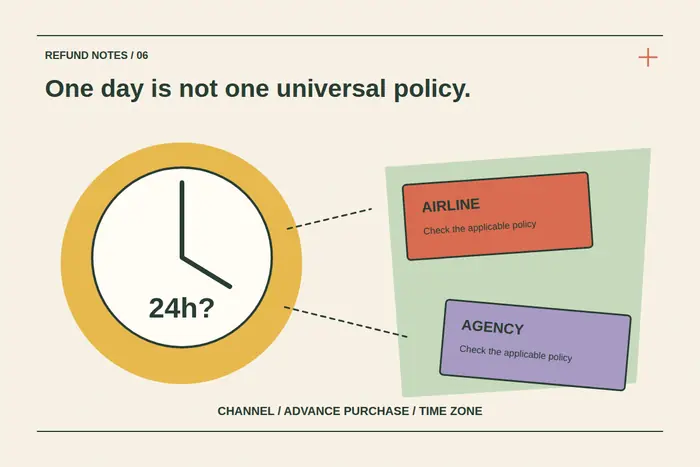
A one-way ticket can be restrictive, and a round-trip fare can permit some changes. Read each selected fare's actual conditions, including the relevant request deadline, change fee, fare difference and cancellation treatment.
Changing one independent purchase does not automatically move the other. Before accepting a new date, check what it means for the rest of the itinerary, hotel nights and any separately booked service.
The fare-type guide explains why a flexible label and a free change are different questions. A waived fee can still leave a price difference for the replacement travel.
Do not skip an outbound flight without checking the consequences
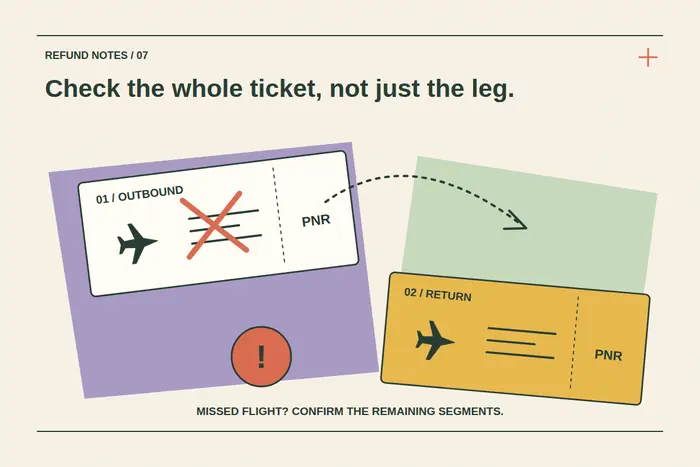
Some airline ticket conditions require flights to be used in the booked sequence. As a specific example, British Airways' conditions of carriage address coupon sequence and possible cancellation of return or onward reservations after a no-show. Follow the conditions applying to your own ticket rather than treating that example as a universal policy.
If you need to abandon or change the outward journey while keeping later travel, contact the booking service before simply failing to board. Confirm which segments remain usable and retain the resulting instructions.
For independent purchases, still review each booking. Separate references do not remove the practical need to keep dates, airports and check-in arrangements consistent.
Assess disruption and connections as separate questions
A return flight several days later is different from a same-day connection between independent tickets. Do not confuse those situations when reading advice about protection or luggage transfers.
If you build a connecting journey from separate purchases, check baggage collection, the next check-in, any airport change and the consequences of a delay. Our self-transfer guide covers those practical issues.
If an airline changes or cancels one part of the trip, ask how the relevant booking is affected. Do not assume an independent second purchase or a hotel reservation will be automatically changed or refunded.
Review both directions before completing the booking
Use flight search to compare the complete route, then review baggage, passenger names, dates and conditions on the options you select. A saved comparison does not reserve the prices while you consider a second purchase.
When purchases are separate, understand that availability can change between them. After completing a booking, verify its final confirmation before repeating the purchase to address an unclear status. Keep the order references and payment records associated with the correct direction.
If paying with crypto, follow each order's current invoice. A payment for one booking does not settle another unless the checkout explicitly combines them. Contact support if you cannot establish what has been confirmed.
Return and one-way flight questions
Are two one-way flights always cheaper?
No. Compare both directions and the services you need on each selected fare.
Does a one-way ticket automatically allow free changes?
No. Read its actual change and refund conditions, including possible fare differences.
Can I skip the outward flight and keep the return?
Do not assume so. Check the ticket conditions and contact the booking service before missing the flight.
Will cancelling one separate purchase cancel the other?
Do not assume an automatic link. Review and manage each booking under its own applicable conditions.