In this guide
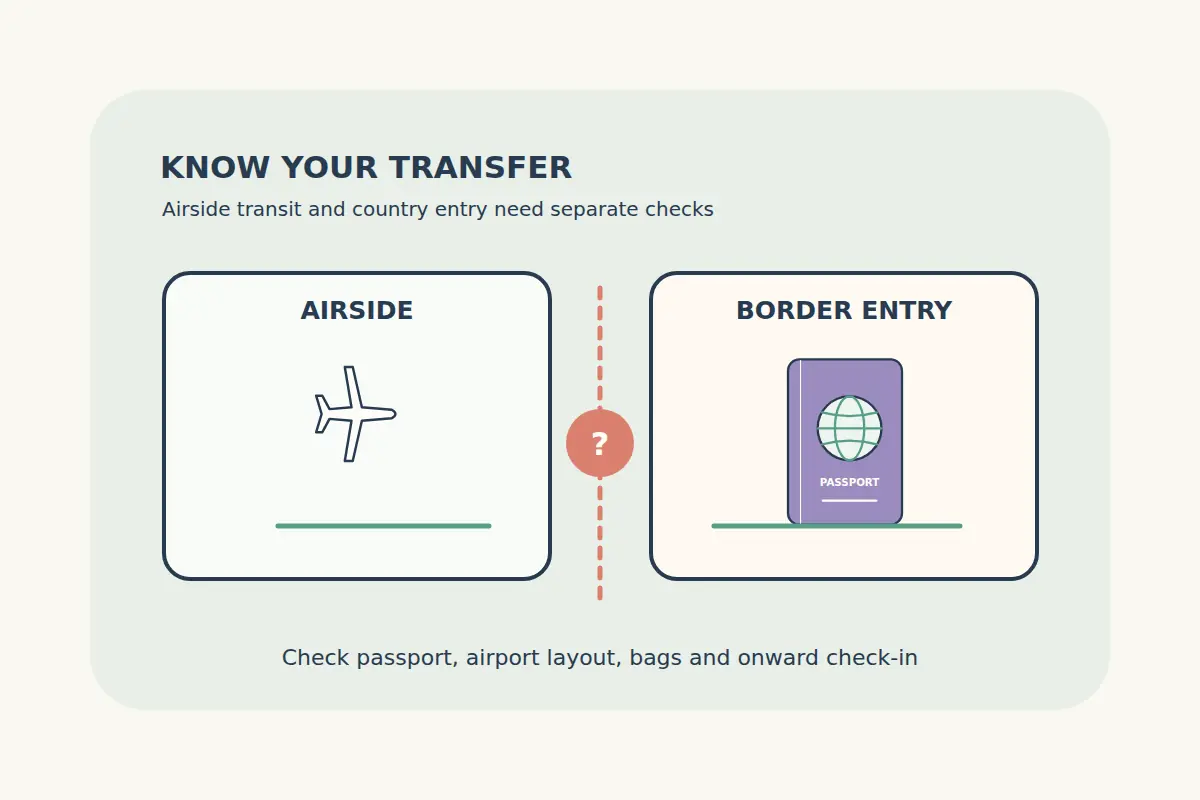
A connection is still part of your international route, even if you never intend to visit the transit country. Some travelers need permission to transfer airside; others need permission to enter the country because the connection involves border control. The length of the layover alone does not answer either question.
Check the actual airports, terminals, baggage arrangements and tickets before buying. A cheap route becomes impractical if your documents do not allow the transfer it requires.
Establish whether you will stay airside
Airside transit means remaining within the airport's permitted international transfer area without passing the country's entry control. Landside travel involves entering the country. Being inside the same terminal building does not establish which process applies.
| Journey detail | Question to ask | Why it matters |
|---|---|---|
| Checked baggage | Is it checked through, or must you collect it? | Collection and another bag drop can require entry. |
| Next boarding pass | Can it be obtained airside for this itinerary? | A landside check-in counter may change the route. |
| Terminals | Is there an available airside transfer? | Some transfers require border control. |
| Airport change | Will you travel between separate airports? | Ground travel generally involves entering the country. |
| Overnight connection | Can you remain in the transfer area overnight? | Opening arrangements and hotel location can matter. |
Ask the operating airline and airport about the physical transfer. Use the immigration authority to establish the permission needed for your passport. These are related checks, but one does not replace the other.
Check your nationality, documents and purpose
Use the passport you will actually travel on, and include residence permits or existing visas where the official rules ask for them. An exemption based on another document can have detailed conditions; possessing that document is not enough unless you meet those conditions.
Check both directions. A return connection can involve different airports, a longer overnight stop or a document that expires before the return date. Our passport and entry guide provides a worksheet for the wider journey.
If your plans include sightseeing or a hotel outside the transfer area, check entry requirements for that activity. Permission limited to an airside transfer should not be treated as permission to leave the airport.
Use country examples carefully
The UK government's transit guidance distinguishes transfers without border control from transfers involving entry and directs travelers to its eligibility checker. Use that check with your own nationality and circumstances rather than assuming a UK connection is automatically visa-free.
The US State Department's transit guidance describes transit visas and circumstances in which another visa or eligible Visa Waiver Program travel may be used. A brief US layover should not be treated as a document-free international transfer.
These examples illustrate why the transit country needs its own check. They do not establish permission for a different passport, airport or route. Apply using the official process and allow time for the actual decision.
Review separate tickets with extra care
With independent purchases, establish who checks your baggage, where the next check-in takes place and what happens after a delay. Do not assume the airlines will transfer a bag or issue the next boarding pass simply because the flights appear in your personal itinerary.
Traveling with cabin baggage removes one possible collection step, but it does not prove you can stay airside. The airport layout, boarding-pass process and national rules still matter. Read the self-transfer guide before choosing the connection time.
Keep the time needed for immigration, ground travel, baggage, security and check-in separate in your planning. A permission check cannot tell you whether a very short connection is operationally sensible.
Confirm overnight and airport-hotel arrangements
Check whether the transfer area remains open for your entire layover and whether any proposed hotel is airside or landside. A hotel described as being at the airport may still require entry through border control.
Before booking a room, ask how to reach it from your arrival flight and return to the departure area. Confirm any terminal restrictions and opening hours. Compare available hotels only after establishing that the location is accessible with your documents.
Repeat the check after a route change
A re-routing can introduce a new country or change an airside transfer into a landside one. Review the proposed route before accepting it, and tell the booking service if the new connection creates a document problem. Our disruption guide covers the other changes to assess.
When comparing flight offers, write down every airport and keep the official document instructions with the itinerary. Recheck before departure. Paying with crypto changes the payment process; it does not waive transit or entry requirements.
Transit visa questions
Can I need a visa without leaving the airport?
Yes. Some nationality and route combinations require airside transit permission.
Does cabin baggage guarantee an airside connection?
No. You still need to check the airport transfer, boarding-pass process and applicable rules.
Can I use an airport hotel with an airside-only permission?
Establish the hotel's location and access first. An airport address does not prove it is airside.
Should I check the return connection separately?
Yes. Its route, timing and your document validity can differ from the outward journey.