In this guide
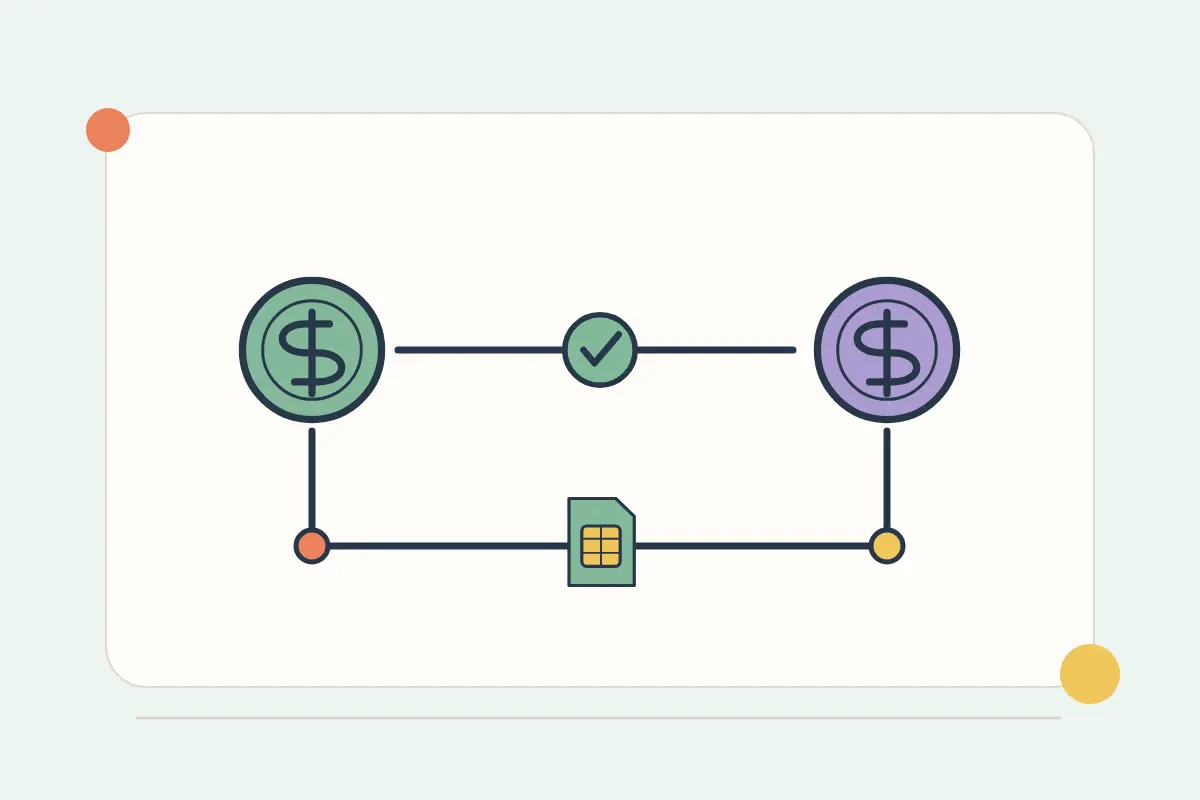
USDT on Tron and USDT on Ethereum are not interchangeable payment routes. The ticker can look identical in a wallet while the blockchain is different. For a hotel, flight or eSIM payment, follow the exact asset and network specified by the current payment invoice.
TRC20 commonly describes token transfers on Tron; ERC20 describes the Ethereum token standard. The issuing asset and the chain both matter. A network supported somewhere in a wallet or exchange does not prove that the receiving payment option accepts it.
Read the invoice before opening the withdrawal screen
Keep the invoice visible and identify its requested coin, blockchain, address, any memo or tag, amount due and expiry. If the wording is unclear, use the payment provider's help or contact support before transferring. A familiar address format or token logo cannot establish that every other detail matches.
The crypto payment network and fee checker compares the labels and amount you enter. It does not inspect an address, prove a token contract is genuine, or authorise a transfer. Use it as a second reading of the invoice, not as a replacement for the invoice.
Compare the sender's actual quote
| Check | Why it matters |
|---|---|
| Withdrawal network | It must be one the receiving invoice explicitly supports. |
| Amount received | A fee deducted from your entry can leave the invoice underpaid. |
| Fee asset | A separate native-network fee is different from a token withdrawal fee. |
| Minimum withdrawal | The exchange may have a minimum that does not fit your invoice. |
| Time and expiry | An exchange review and blockchain confirmation are separate stages. |
Do not assume that one blockchain is always the cheapest. Exchange withdrawal pricing, wallet behaviour and network conditions can differ. A quoted fee from your own sender is more useful than a general fee comparison captured on a different day.
Check how much will reach the invoice
Suppose a hypothetical invoice requires 100 USDT. If the sender takes a 1 USDT fee from a 100 USDT transfer, only 99 USDT is expected at the destination. If it charges the fee separately, the same 100 USDT entry can represent a different balance requirement. Read the withdrawal preview rather than guessing from your wallet balance.
For a separately paid network charge in another asset, select that fee asset in the checker and choose the separately paid option. Confirm how the sender will charge it; the preview remains the source for the final amounts. Use the crypto converter for an indicative fiat comparison, and the current sending quote for the actual charge.
Payment status and booking status remain separate
A submitted withdrawal can still be under exchange review. A blockchain transaction can still be confirming. A recorded payment can still be followed by travel-order processing. Keep the booking and payment references and follow the status shown by the relevant provider.
If payment seems late, partial or attached to an expired invoice, review payment sent but booking not confirmed. Avoid sending again simply because an email has not arrived. Never send support a wallet recovery phrase.
Common questions
Can I send TRC20 USDT to an ERC20 invoice?
Do not send using a different network from the one the invoice requests. Recovery depends on the systems and parties involved and must not be assumed.
Does a list of USDT-supported protocols show what CryptoTraveler accepts?
No. The issuer's protocol list and an individual checkout's accepted routes answer different questions.
Should I make a small test payment?
A timed travel invoice may have minimum, partial-payment and expiry rules. Follow its instructions rather than improvising split payments. For the booking steps themselves, see booking flights with USDT.
Sources and further checks
Checked on 27 October 2026. Product availability and individual terms can change.