In this guide
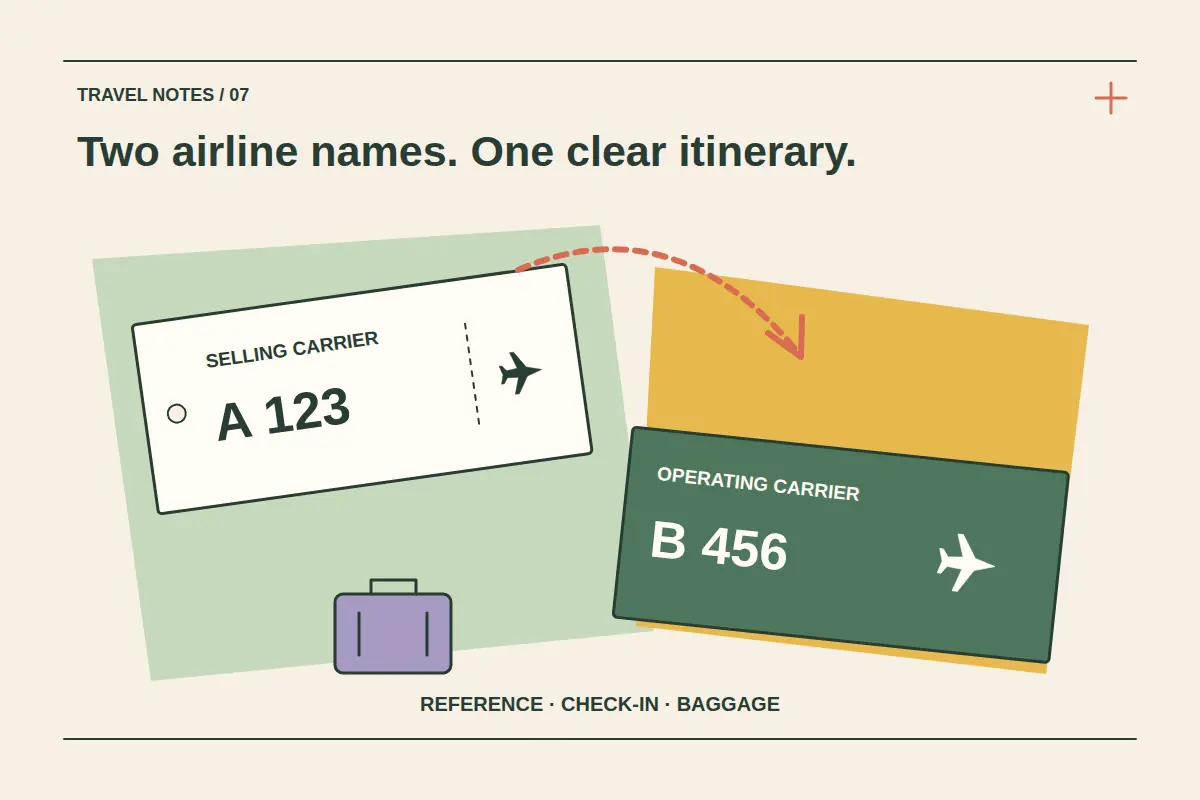
A codeshare flight can be sold under one airline's flight number while another airline operates the aircraft. Both names can therefore appear legitimately on the same itinerary. The useful task is to identify who operates each flight and which reference and service conditions apply to it.
This matters when comparing flight offers, checking in, adding baggage or finding help after a change. The payment method does not settle those operational questions. Keep the ticket information and the named operating carrier visible when reviewing your journey.
Distinguish the selling airline from the operating airline
The marketing airline's flight number is the code under which the service is sold. The operating airline provides the actual flight. Look for wording such as operated by in the offer or confirmation rather than inferring the operator from the most prominent logo.
The US Department of Transportation's ticket-buying guidance explains codeshare operator disclosure in its applicable context. For your booking, read the operator information for every segment, including a short connecting service that may use a different airline.
| Detail | What it helps you identify |
|---|---|
| Marketing flight number | The service code shown on the sold itinerary. |
| Operating carrier | The airline actually providing that flight. |
| Airline reservation reference | A code used by the relevant airline's booking or check-in system. |
| Travel-platform reference | The record used to retrieve the order with the booking platform. |
| E-ticket information | The ticket record to review alongside the itinerary and passenger details. |
Check in with the airline operating the first flight
Start with the operating airline for the first flight in each direction and its check-in instructions. Recheck on the return journey: the first operator can differ from the outbound operator. At the airport, use the current airline or airport information for the actual terminal and counter.
Emirates' codeshare FAQs illustrate why partner check-in arrangements need their own check. Read the instructions for the combination on your ticket; do not assume that any counter carrying a partner's logo can process every codeshare booking.
Our online check-in guide explains the distinction between the platform reference, airline reference and boarding pass.
Use the reference the airline's system expects
Your order can contain a CryptoTraveler reference and one or more airline references. A partner airline's website may not recognize a reference belonging to another system. Compare the confirmation details with the airline's requested reference type and use the passenger name as recorded.
If the system cannot locate the booking, confirm the operator, reference and name format before concluding that the ticket is missing. Keep the e-ticket and order information available for support. Avoid posting a reservation reference and passenger name publicly, because those details can expose access to booking information.
The flight-document guide helps identify which record answers each question.
Verify the baggage allowance rather than guessing
Read the baggage shown for the ticketed journey and each passenger. Partner itineraries can involve particular carrier agreements and route-specific rules. The operating airline's aircraft does not, by itself, establish that every baggage allowance is determined by that airline's general website table.
Check cabin and checked baggage separately, including dimensions, weight, pieces and any limits for a smaller connecting aircraft. If information conflicts, ask the booking channel or relevant airline to confirm the allowance for that exact ticket before purchasing another bag.
Also establish where you collect checked baggage during a connection. Codesharing and through-checking are related operational questions, but one label should not replace confirmation of the actual baggage process. Review the baggage guide and transfer instructions.
Check seats, extras and conditions across the partners
A service available on the marketing airline's own flights may work differently on a partner-operated segment. Review which seat services, meals, assistance arrangements or other extras are actually confirmed. An unpriced or unavailable option in one system is something to investigate, not proof that the same service is automatically included elsewhere.
Ask which channel handles the extra and retain the confirmation. If a change affects the itinerary, review the flight, seat and baggage arrangements together. Keep service conditions separate from the underlying fare's cancellation or change rules.
Keep codesharing separate from ticket protection
A codeshare number does not independently tell you whether two journeys are on one ticket, whether a self-transfer is involved or whether you must pass border control. Establish the actual ticket structure and transfer steps before deciding how much connection time is workable.
Read the connecting flights and self-transfer guide and check documents for any country where you enter or transit. If the airline changes the route or operator, repeat the checks for the replacement itinerary.
Codeshare flight questions
Why does the ticket name one airline and the aircraft another?
That can be the normal result of a codeshare arrangement. Read the operated-by information on the confirmed itinerary.
Can I use the CryptoTraveler reference on every airline website?
Use the reference type the airline requests. The booking-platform code and the airline's reservation code can be different.
Does a codeshare guarantee free baggage or seat selection?
No. Verify the allowance and services confirmed for your fare, passengers and individual flights.