In this guide
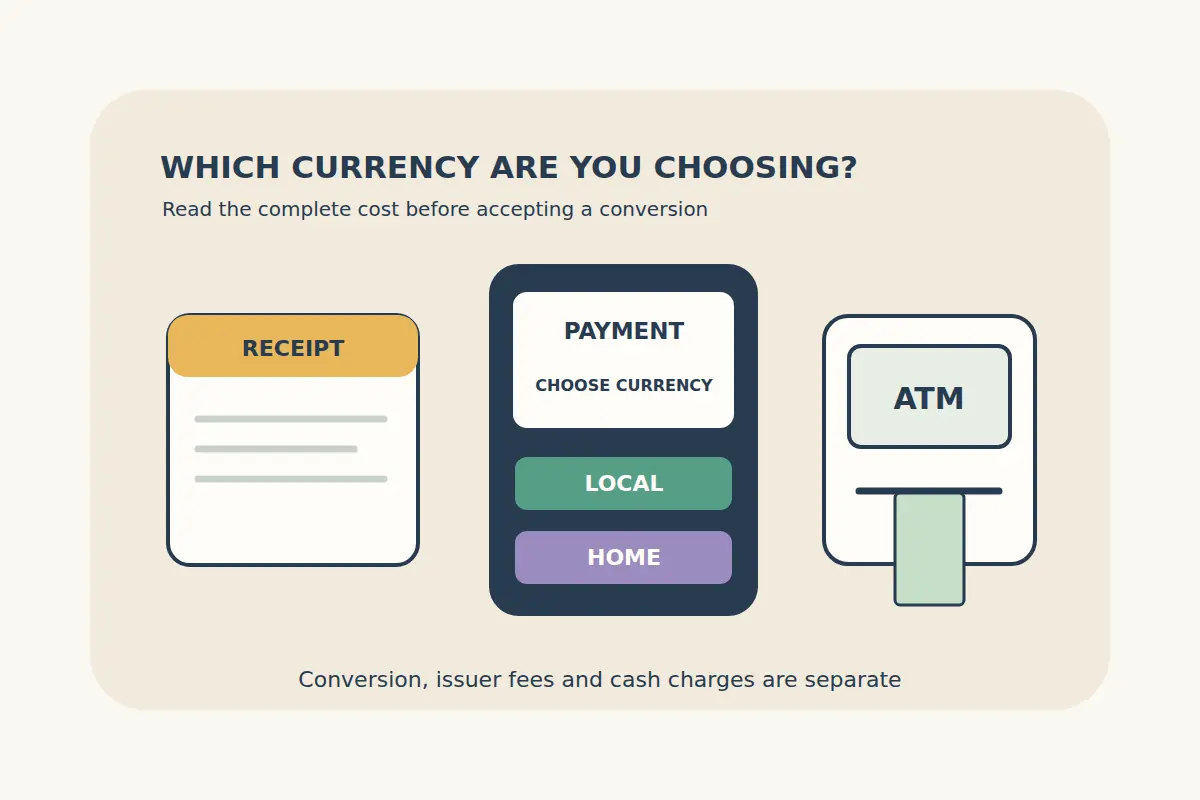
A card terminal abroad may ask whether you want to pay in the local currency or your home currency. An ATM can offer a similar choice while dispensing local cash. The familiar home-currency amount can be convenient, but it also means accepting a particular conversion service.
Read the amounts and fees before confirming. Choosing the transaction currency, checking your bank's charges and deciding whether to withdraw cash are separate parts of the total cost.
Recognize dynamic currency conversion
Dynamic currency conversion, or DCC, is an offer from a merchant or ATM provider to convert the charge into your card's home currency. Declining that offer generally leaves the transaction in local currency for conversion under your card's arrangements.
Visa's DCC guidance explains that the displayed choice should include both currency amounts, the exchange rate and additional fees or markup. The provider should let the cardholder choose rather than selecting on their behalf.
A phrase such as guaranteed rate does not establish that the offer is cheaper. First identify which currency you are authorizing and who is providing the conversion. If the screen is unclear, stop and ask before entering the PIN or accepting.
Keep the main costs separate
| Cost | Who may set it | Where to check |
|---|---|---|
| DCC conversion | The merchant or ATM conversion provider. | The offered rate, markup and home-currency amount. |
| Card conversion | Your card's applicable conversion arrangements. | The issuer's terms and relevant exchange-rate information. |
| Foreign transaction fee | The card issuer. | The card agreement, including how it defines foreign transactions. |
| ATM operator charge | The owner or operator of the ATM. | The withdrawal screen before acceptance. |
| Issuer cash-withdrawal charge | Your bank or card issuer. | The account's cash and overseas ATM terms. |
| Credit-card cash advance | The credit-card issuer. | Cash-advance fees, interest and withdrawal limits. |
Declining conversion does not cancel every other fee. Similarly, a card advertised without a foreign transaction fee can still have cash-withdrawal costs. Read the specific terms for the action you are taking.
Compare the full amounts rather than a single rate
For many travelers, paying in local currency avoids accepting the merchant's conversion markup. Visa's foreign-transaction guide discusses this choice and the separate costs that can arise at ATMs. Your own card terms determine the comparison; do not treat a local-currency choice as a universal guarantee of the cheapest result.
Fictional comparison: a restaurant bill is €100. The terminal offers a DCC charge of £91. Suppose the card's conversion would instead produce £87, with a hypothetical 2% issuer charge: £88.74 in total. In that example the card route costs less. The figures and rate are invented, and the actual card conversion may be determined later.
Write down what each quote includes. Do not compare a DCC amount that includes one fee with a rough currency-app estimate that excludes your own issuer's charges. If you cannot establish the cost, you can decline the offer or cancel before authorization.
Read ATM screens as two decisions
First decide whether to accept the ATM's disclosed access charge. Then read any conversion offer separately. Declining conversion can still allow a local-currency withdrawal, but follow the actual screen carefully; cancel if you cannot determine what it authorizes.
Check the amount of cash, any operator charge and the transaction currency on the confirmation. Retain the receipt without exposing account details. Reconcile the withdrawal with the amount posted by your bank rather than relying only on an estimate shown by a travel app.
Balance repeat fees against how much cash you reasonably need. Withdrawing a large sum solely to reduce the number of transactions introduces other practical risks. Plan the cash needed for the first transfer or local payments without assuming every business takes cards.
Treat credit-card cash advances separately
Using a credit card at an ATM can draw on a credit line rather than your bank balance. The US Consumer Financial Protection Bureau explains cash-advance fees and interest, including that interest can begin immediately. Check your own agreement before using this as an everyday cash source.
Foreign-transaction charging can also depend on the transaction's location or merchant, not only the currency displayed. The CFPB's disclosure guidance distinguishes these fee descriptions. Ask your issuer how its terms apply rather than assuming a home-currency charge removes the fee.
Keep hotel deposits and crypto payments distinct
A hotel's temporary card hold is different from a completed purchase or cash withdrawal. Check its required currency, accepted card and release process using the hotel deposit guide. A stay paid online can still have a separate property guarantee requirement.
For a CryptoTraveler checkout, use the displayed order and invoice instructions. DCC advice for a card terminal does not replace the cryptocurrency network, amount and expiry checks described in our Bitcoin and stablecoin travel guide. Keep a practical backup payment method for local needs as part of the departure checklist.
Currency and ATM questions
Is paying in local currency always cheaper?
It often avoids the offered DCC markup, but compare your actual issuer terms and the full charges.
Does declining conversion remove an ATM fee?
No. The ATM operator charge and issuer fees are separate from the conversion choice.
Can a home-currency payment still have a foreign transaction fee?
Yes, depending on how the issuer defines and charges foreign transactions. Check the card agreement.
Is withdrawing cash on a credit card the same as using a debit card?
No. A credit-card cash advance can involve separate fees, interest and limits.