In this guide
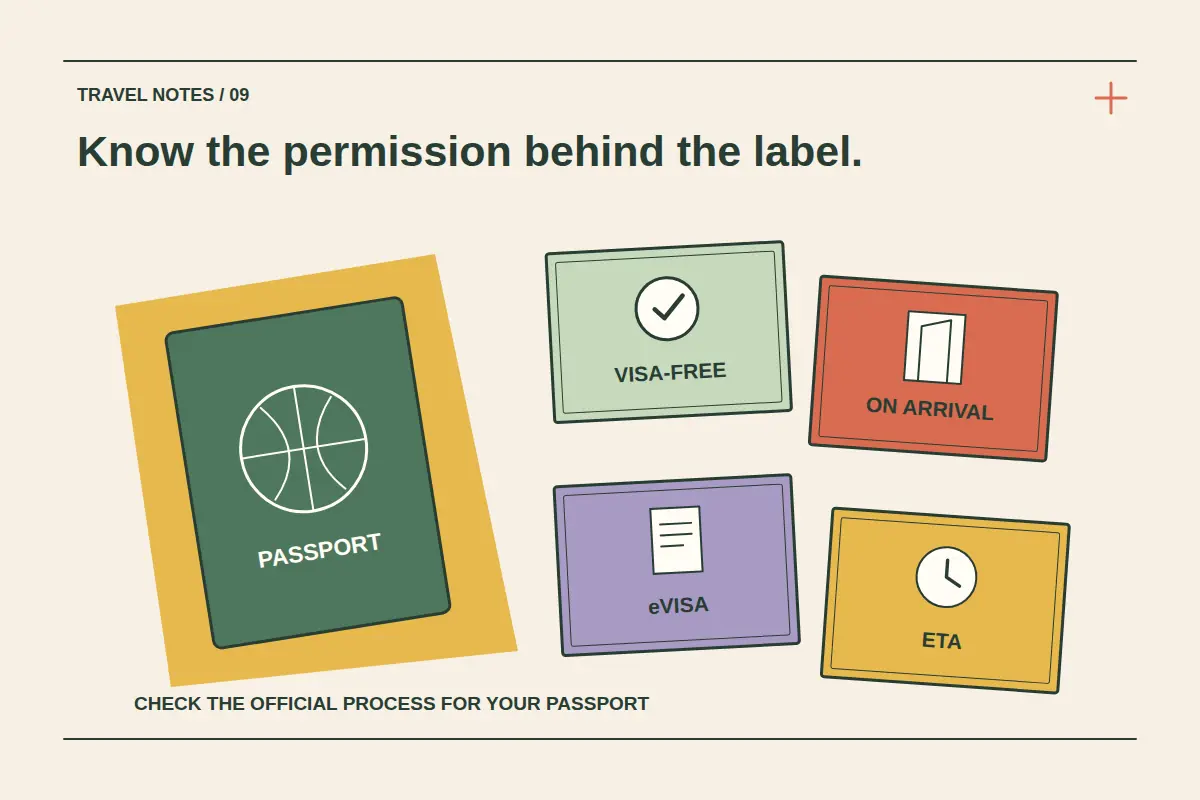
Visa-free travel, a visa on arrival, an eVisa and an electronic travel authorization describe different arrangements. The label affects what you need to do before leaving, but it does not answer every question about eligibility, documents or admission. Read the destination authority's actual rules for your passport and trip.
The comparison below is a starting point for ordinary-passport tourism. Work, study, residence, transit, special passports and personal circumstances may follow different rules. Use the CryptoTraveler visa checker for dated reference guidance, then follow the relevant official process before relying on the result.
Compare the permission and the timing
| Arrangement | Typical meaning | What to establish before departure |
|---|---|---|
| Visa-free | A qualifying traveler can make the permitted visit without obtaining a visitor visa. | Eligibility, any separate travel authorization, stay limits and supporting documents. |
| Visa on arrival | An eligible traveler can obtain the relevant visa through the destination's arrival procedure. | Eligible passports, arrival point, documents, fees and any prior steps. |
| eVisa | A visa application and approval are handled electronically under that country's process. | Approval before travel, its validity, entries, purpose and arrival conditions. |
| ETA or similar authorization | A separate electronic permission may be required before travel under the destination's rules. | Whether it applies, how to obtain approval and the document to which it is linked. |
Countries use different terminology. A destination may describe visitors as visa-exempt while still requiring a travel authorization. In a comparison tool, showing that authorization separately helps make the advance action visible.
Read visa-free status alongside entry conditions
Visa-free does not mean document-free or an unconditional right to stay indefinitely. Check the permitted purpose, passport conditions, length of stay, repeat-visit limits and evidence required for the journey. Arrival or customs forms can also have their own process.
Look at the whole route, including a transit stop and the return. The passport and entry checklist explains why one headline rule cannot replace a traveler-specific document review.
Confirm that visa on arrival applies to your journey
Do not infer eligibility from another traveler's experience or a destination's general visa-on-arrival label. Check the passport, purpose, permitted arrival point, available procedure and required evidence directly with the authority. Verify any pre-registration or advance approval step before leaving.
Allow practical time for the arrival process and keep the stated supporting documents accessible. If information is inconsistent, resolve the issue with the official authority or airline before committing to the route. A plan to ask at the border is not a substitute for establishing boarding requirements.
Separate an online application from an approved eVisa
Electronic describes the application or issuance process; it does not make every application immediate or automatically successful. Review the official decision, spelling, passport details, purpose, validity and entries after approval. An application receipt alone does not establish permission to travel.
Save the approval in the format required by the destination and check whether a particular entry point or document presentation is specified. If you renew a passport or change the itinerary, establish whether the approved permission remains appropriate.
Understand why an ETA can apply to visa-exempt visitors
The UK government's ETA guidance illustrates a separate advance authorization with its own eligibility and exceptions. Use its official checker for your nationality, documents and trip instead of assuming that a visa-free label removes all advance steps.
Canada's official eTA guidance is another country-specific example. Its conditions must be read on their own; an authorization for one country is not a worldwide document. Avoid copying fees, processing expectations or exemptions from one system into another.
Use the checker without treating a label as an approval
Select the passport and destination to view the source category, any supplied duration and the data dates. A result without an individual verification date has not acquired a fresh verification simply because you looked it up today. Follow the official destination links to confirm the current requirements.
The tool also distinguishes cases requiring a visa in advance and listed admission restrictions. A missing duration is not zero or unlimited stay. Personal exceptions, residence permits and previous visas need separate official checking. Our transit guide covers another important limit: permission for a tourist visit does not automatically answer the airport-transfer question.
Finish the check before booking and again before departure
Make a short record for every traveler: official source, permission needed, completed action, validity, supporting documents and the date checked. Review connections and entry points alongside the flights. Repeat the check after a passport or itinerary change.
Once the requirements are clear, compare flights and accommodation that fit the approved plan. Paying with Bitcoin or another cryptocurrency does not change immigration eligibility or guarantee boarding.
Visa category questions
Does visa-free mean no advance permission of any kind?
Check the destination's complete rules. A separate ETA or other authorization can apply to travelers who do not need a visitor visa.
Is an eVisa the same as a visa on arrival?
No. Establish when the application and approval must happen and where the permission is issued for that country.
Does an approved permission guarantee entry?
Follow the destination's admission conditions and border process. An online category or approval should not be treated as an unconditional entry guarantee.