In this guide
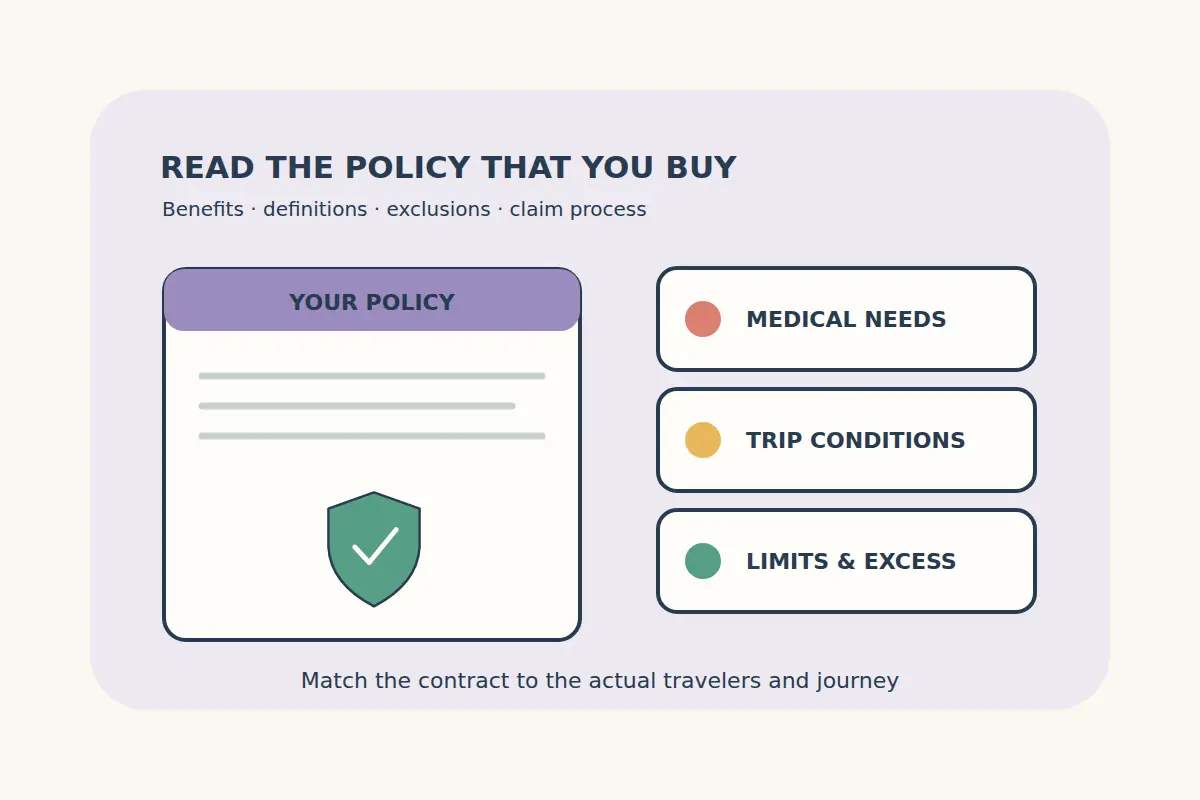
Travel insurance is a contract with conditions, not a general promise that every travel problem will be paid for. The useful comparison starts with your actual trip and the events you need covered, then checks the policy wording, limits and exclusions.
A low premium or a high headline medical limit does not answer every question. Read eligibility, cancellation terms and the claim process before buying, and ask the insurer to clarify anything essential in writing.
Start with who is traveling and where
List all travelers, their ages and country of residence, the complete dates and every destination. Check the maximum length of a single trip, even for an annual policy. Include stopovers and any work, study, cruise or planned activity that may affect the cover.
The Australian government's Smartraveller insurance guidance emphasizes reading the policy's inclusions, exclusions, definitions and claim process. Its advice is written for Australians; your own eligibility and contract still need checking with the insurer selling the policy.
Do not choose a geographic region merely from the destination's informal name. Check the policy's definition and how it treats transit countries. If the route or trip length changes, ask whether the policy must be updated.
Compare benefits alongside conditions and excesses
| Area | Questions to ask | Detail to record |
|---|---|---|
| Medical treatment | Which treatment, conditions and destinations qualify? | Limit, excess and assistance requirements. |
| Evacuation and repatriation | Who decides and authorizes transport? | Scope and emergency contact process. |
| Cancellation and curtailment | Which reasons and booking costs qualify? | Covered events, timing and financial limit. |
| Disruption or missed departure | Which causes, waiting periods and journey types qualify? | Definitions and evidence required. |
| Baggage and valuables | What limits and security conditions apply? | Single-item limits, exclusions and reporting duties. |
| Activities and vehicles | Does the planned activity need extra cover? | Activity, licensing and other conditions. |
An excess or deductible is the amount you may bear under the policy. Establish whether it applies per person, event, claim or benefit. A large benefit limit can coexist with a lower sublimit for the particular item or event you care about.
Check medical needs and declarations carefully
Answer the insurer's medical questions accurately and ask how it defines a pre-existing condition. Do not decide for yourself that a condition is irrelevant because it is stable or treated. Keep the insurer's acceptance and any amended terms with the policy.
UK government guidance identifies medical needs, repatriation and activity exclusions as important checks. It also explains that an EHIC or GHIC does not replace travel insurance. Use the healthcare and insurance arrangements applicable to your own circumstances.
Review activities specifically: a scooter excursion, a winter-sports day or a diving trip may need a different answer from a general sightseeing holiday. Ask about the exact activity rather than relying on the phrase adventure cover.
Understand when cancellation protection starts
Check when each benefit becomes effective and which reasons for cancellation are covered. Simply deciding not to travel is different from an insured event. Do not assume that buying a policy after learning about a problem makes that existing event covered.
Review recoverable amounts from airlines, hotels or other services before calculating a claim. A non-refundable rate label does not establish insurance eligibility. Our booking cancellation and refund guide explains why the underlying travel conditions still matter.
For card-linked cover, check any activation, payment or minimum-spend requirement with the issuer or insurer. Holding a card does not by itself establish that the trip has been insured.
Ask how the insurer handles payment evidence
Keep the booking confirmation, invoice, cancellation terms and receipts showing what was purchased and its stated currency value. If you paid with crypto, retain the order and payment records together. A wallet transaction alone may not identify the passenger, itinerary or service.
Ask the insurer whether its eligibility rules accept your payment method and what evidence it requires. Do not assume coverage of wallet losses, token price movements or a lost private key because a policy covers a travel booking. Those are separate risks.
The payment and booking status guide helps you keep the records distinct. If the service's confirmation is unclear, establish that status before treating it as a confirmed insured travel cost.
Save the assistance and claim instructions
Record the emergency assistance number and policy reference offline. Read when advance authorization is required for costs, and what reporting deadlines apply. Keep airline notices, medical records and itemized receipts as relevant to the event.
The Smartraveller-hosted guide to policy wording explains why the benefits table should be read with definitions, exclusions and claims conditions. Save the actual version you purchase and any insurer clarification.
Use the departure checklist to organize documents and contacts. If a flight or bag problem happens, the disruption and baggage action plans help identify the records to preserve.
Travel insurance questions
Does cancellation cover let me cancel for any reason?
Not automatically. Read the covered reasons and any specific optional benefit and its conditions.
Is an annual policy unlimited for each trip?
Do not assume so. Check its maximum trip length and other eligibility limits.
Does paying with crypto automatically exclude or include a trip?
Ask the insurer. The actual policy and its evidence and payment conditions determine eligibility.
Is the benefit table enough to compare policies?
No. Read it alongside the exclusions, definitions, excesses and claims process.